

Are you a catastrophizer?
One thing doesn’t go according to plan, and all of a sudden…
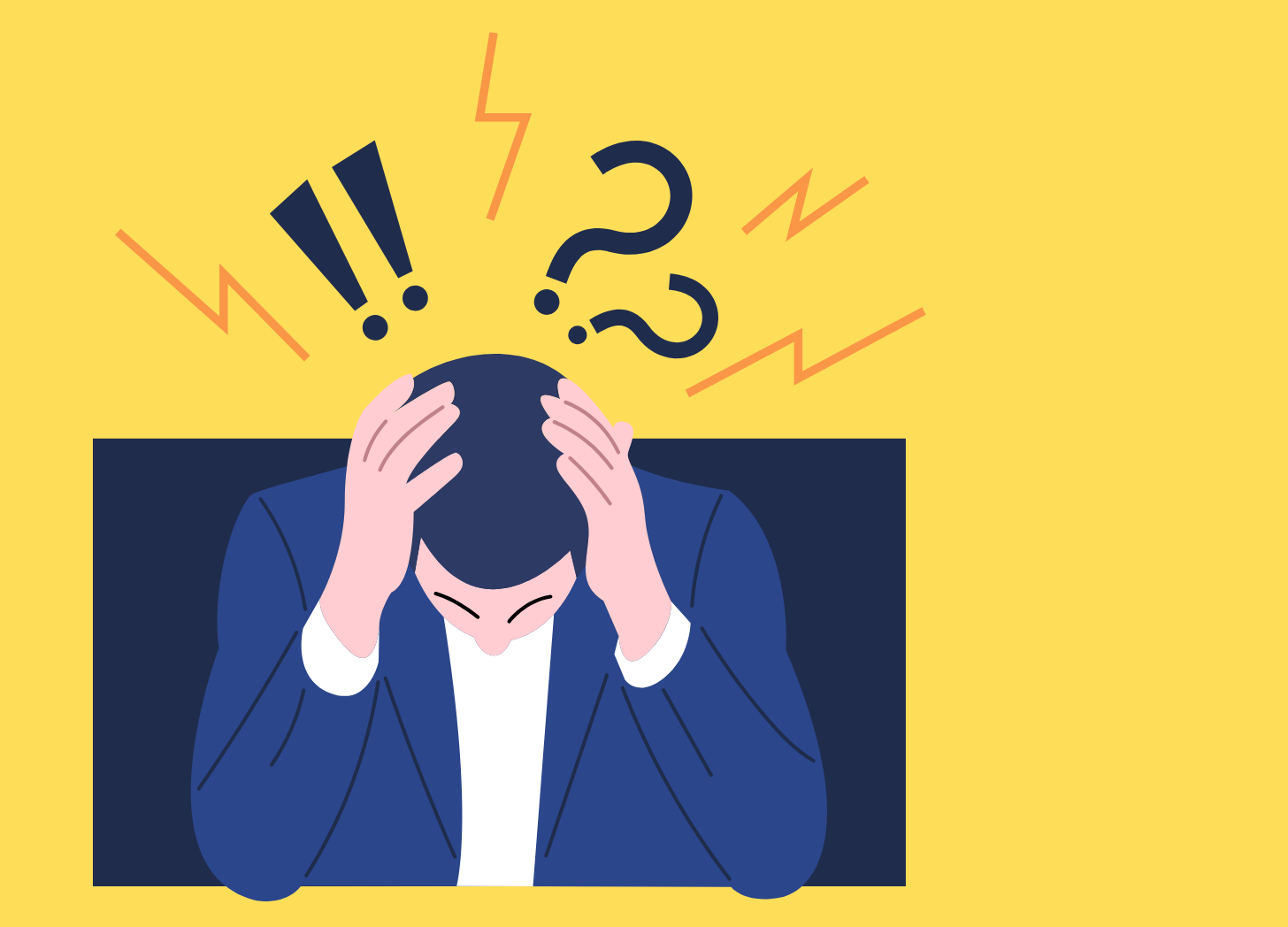
Yesterday, I was out on a walk with a friend of mine. He was sharing an issue he was facing. As he described the issue, I could feel the weight he was feeling. And then all of a sudden, he went down this path: “What if I lose my job over this, and it’s a bad economy, but if I end up losing my house…”
Sound familiar? We’ve all been there (usually at 2 or 3 AM), where a bump on the road becomes Mt Everest.
Why do our brains do this?
The One Truth
Catastrophizing isn’t a design flaw; it is actually a key feature in our brain designed to keep us safe. Sounds crazy, doesn’t it?
The human brain, as we know it today, is the result of millions of years of evolution. Today, human brains live in the modern world, but our prehistoric ancestors lived on the savannah, where their primary focus was on finding food, water, shelter, and not becoming lion food. In these conditions, underestimating a threat was more costly, likely resulting in death. So, our brains developed a preference toward overestimating threats. Pretty clever, huh?
Behavioral scientists call this negativity bias - the tendency to give more weight to threats than opportunities. Historically, for human survival, miscalculating a threat was life-threatening.
As clever as our brains are, they are not always smart. Our brains haven’t quite caught up to the fact that we now live in the modern world, and for more of us, there is a low chance of getting killed by a lion. But our brains don’t recognize that. So that dump thing you said in that meeting that everyone else has probably forgotten about, that you are still thinking about, all your brain here is ROAR.
Another reason our brains catastrophize is that they don’t like uncertainty. Let’s say you’ve just applied for a mortgage to buy a new house. Now, you have the hard work of waiting. Will you get approved? Will you get declined? Way too much uncertainty. The brain attempts to resolve this uncertainty by putting forward a resolution, but rather than thinking, I will get approved (the positive bias), it will likely lean toward, I will get decline (the negative bias) because it views the decline as a threat and it is better to caution against a threat and be wrong than be optimistic and be wrong.
The One Insight
Catastrophizing tells us a few things about our brains. First, is that, our brains are imaginative. Isn’t it amazing how we can take one dumb thing we said and turn it into a career-ending move? Second, is how fungible our brains are. If we can quickly turn a dump in the road into Mt Everest, we could also channel that into a more positive direction. The same brain that just mapped out every catastrophic outcome of that missed deadline with remarkable speed, detail, and emotional vividness is also capable of doing the exact opposite. Your brain can imagine things going well. It can imagine the most likely scenario. It just needs some direction to work for you instead of against you. And this redirection is important because when we imagine what can go well, we are hopeful, and when we are hopeful, we move. When we catastrophize, we get stuck.
Insight into Action
Move. When you notice yourself catastrophizing, close the screen, stand up, and get going. Pace, stretch, get outside for a walk, anything that will get your body physically moving. This will interrupt the mental loops that fuel catastrophizing, help burn cortisol (the stress hormone), and reset your brain to think more clearly.
Scenario Plan. Get a sheet of paper. Draw three columns. Label the right column “Worst Case,” the middle column “Most Likely”, and the left column “Best Case”. Now fill it out, starting on the right. Write the worst case first, in full. Let the imagination do its thing. Then move to the left, and here once again, give the imagination full permission. What does the best case actually look like? What could genuinely go well? What's possible if things break in your favor? Then move to the middle, what’s most likely to happen? This is where you need to think about the rational middle, which is easier to do when you’ve gotten the extreme ends out. This works because writing engages the prefrontal cortex (the part of the brain responsible for logical reasoning).
Talk It Out. This is especially important if you are an extrovert who needs to process externally. This is effective for introverts too, but introverts may not naturally feel the need/want to talk it out. This works because putting our feelings into words reactivates the prefrontal cortex, but unlike thinking it out or writing it out, when you say it out loud to someone, you put distance between the feelings and create space for your rational brain to kick in.
Pro Tip: Combine talking with someone with movements, say a walk.
Get Unstuckifyed
Catastrophizing can keep us stuck, running endless scenarios that never end well. Catastrophizing is our brain’s weird way of keeping us safe, and it is evidence of your strong, vivid imagination. We can use that imagination to point ourselves in a more positive direction…we can force ourselves to think about what’s the best that could happen? We can ask ourselves to consider what’s most likely to happen?
Til Next Time,
We don’t have to be victims of our brain wiring; we can rewire it, and that’s a key part of getting Unstuckifyed.
Thanks for getting Unstuckifyed with me.
Dr Dani